
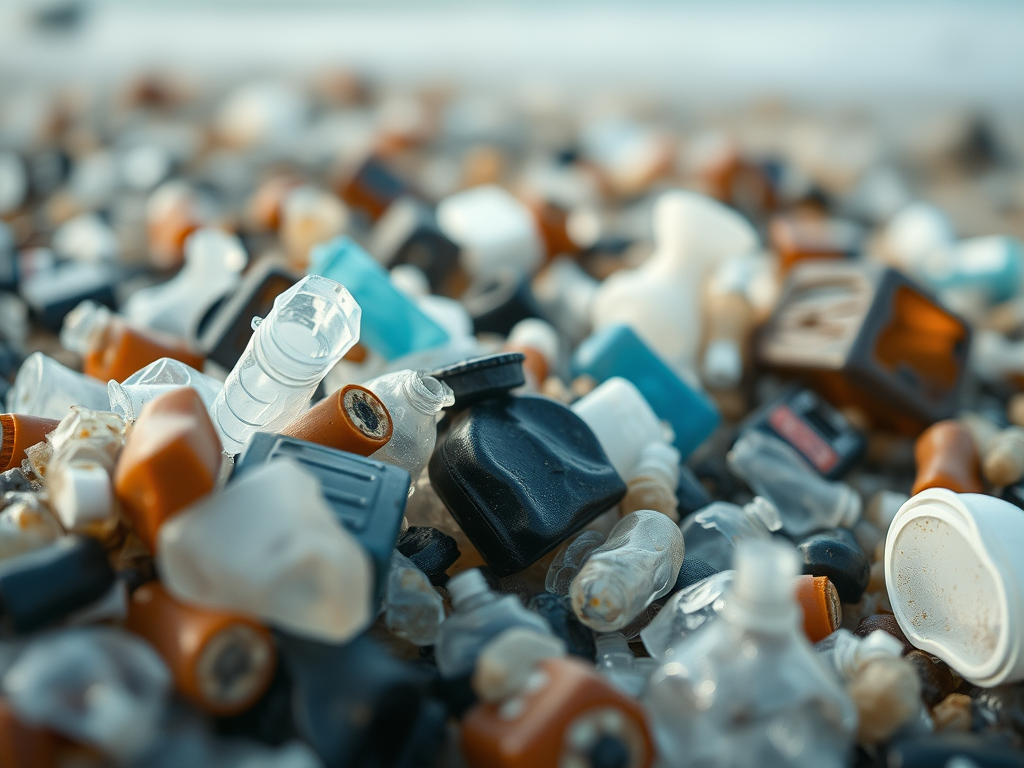
How Do People Become Contaminated by Microplastics?
Between 78,000 and 211,000 minute plastic particles (microplastics) are consumed per person per year. The particles are found across our environment and unfortunately can easily enter the human body.
This article describes the main ways humans are exposed to microplastics:
- Ingestion through Food and Water
Microplastics have infiltrated the food chain, particularly in seafood, bottled water, and even crops grown with contaminated fertilizers. Fish and shellfish absorb microplastics from oceans, which then pass into humans through consumption.
Both tap and bottled water contain microplastics, as current filtration systems often cannot filter out particles of this size. This is a significant source of human microplastic consumption.
Possible solutions: Promote stricter water filtration standards and reduce plastic packaging of bottled water. Enhance regulations on plastic waste management to reduce contamination in food and water sources. - Inhalation from the Air
Microplastics are airborne, especially in urban environments, and are inhaled with every breath. Studies have shown their presence in household dust and air, making inhalation an unavoidable contamination route.
Possible solutions: Reducing plastic use in everyday products and improving air filtration systems in homes and workplaces could help minimize exposure. - Contaminated Soil and Fertilizers
Sewage sludge, used as fertilizer in agriculture, contains high levels of microplastics, which leach into crops and, subsequently, our food supply.
Possible solutions: Develop and implement microplastic-free fertilizers, and regulate the use of sewage sludge in agriculture to reduce contamination of crops. - Food Packaging and Storage
Plastic packaging can degrade, releasing microplastics into the food we eat. This contamination is exacerbated by long-term storage of food in plastic containers.
Possible solutions: Encourage the use of alternative, biodegradable packaging materials, and reduce reliance on single-use plastics.
Sources:
Cox et al, “Human consumption of microplastics” (2019)【source】
World Economic Forum, “Microplastics in Human Blood” (2022)【source】


Leave a Reply